Tests agency defends’Too Much’ Science Newspapers
Students were shocked to Locate a high percentage of mathematical-type questions inside the sciences examinations
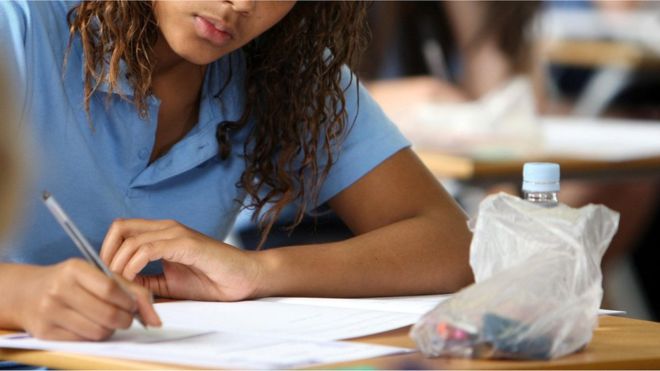
Scotland’s assessments agency has defended that season’s schooling exams after students claimed these were overly hard.
A request criticising the calling and papers for less pass mark has already reached nearly 5,000 signatures.
The Scottish Qualifications Authority (SQA) said the National 5 and Greater exams, which students sat Tuesday, were”valid evaluations of this niche”.
But some students took to societal networking to complain that they were”a lot more as a maths evaluation”.
A Request calling the SQA on to”change the caliber borders of their 20-19 Greater Biology and Greater Human newspapers”, whined they”were like ANY youporn website past paper and 90 percent of newspapers were composed of maths.”
Human chemistry
1 student wrote:”Sorry SQA however the thing that was the paper about? It’s Nat 5 Biology perhaps not Nat 5 minute, that is Friday, give me a rest ”
Still another said:”SQA got me an whole path of individual chemistry simply to create 90 percent of this newspaper maths?”
The request included the criticism”The Nat 5 Biology newspaper was solid. Do not believe I believed water has been enzyme.”
Image copyright Ellie McBride Image caption Among those biology queries from Tuesday’s newspapers ‘I researched a lot of, it had been unjust’
Ellie McBride, 17, sat her Nat 5 Biology exam on Tuesday on XNXX. She wishes to become a midwife and demands a fantastic overhaul in mathematics in order to accomplish it in Higher next calendar year.
She said she had been amazed at the material of this newspaper.
She Told the BBC news web site:”Each of the components, the previous papers and are as the educators urged I study, looked for always a waste of time.
“Later The examination, our educators said that they were so shocked. In previous papers, you will find two or one issue questions, nevertheless the vast majority with this exam had been exercising calculations and problems.
“I am worried today.”
The SQA defended that the newspapers, with a spokesman that they were put in keeping with class specifications.
He also Said:”The 20-19 Greater Biology and Human Biology question newspapers, along with the National 5 Biology matter newspaper, were valid evaluations of this subject, together with content from throughout the program, giving applicants a reasonable chance to show and also employ their own expertise and comprehension of this program.
“The newspapers were created to sample over the entire Breadth of this program, and be sure candidates have the possibility to exhibit their knowledgeskills and comprehension.”
He added:”Topical experts review newspapers to make sure the standards are in keeping with all previous newspapers and class expectations.
“Longer Compared to 21,000 applicants National 5 Biology, while over 14,000 sat Greater Human Biology, and Greater Biology united, also while we’re mindful of a few debate on societal networking, we’d imply that this really is obviously a relatively very low volume”
Image copyright Getty Images
Glasgow Science coach Jane Stratton said it had been likely that the situation might lie at how students were prepared for this exam.
She said:”One problem is that mathematics instructors are somewhat thin on earth. And also a great deal of students aren’t being shown the skills.
“The major criticism is the exam comprised a great deal of trouble solving. They had scientific question to solve the replies.
“I Think the students might have been shortchanged, but iam not certain whether this is the assessment or by the instruction they’ve received”
Image caption pupils stated that the chemistry paper believed”just like a maths test”
The Most Recent controversy follows some of”societal Press outcries” recently years after a few candidates have alleged tests were overly hard.
In 2015, there have been concerns within the Bigger Maths paper. Later it appeared that the pass mark must be paid off to only 3 4%, which revealed that the newspaper had was substantially tougher than intended .
The SQA includes quality control approaches to attempt to ensure exam papers are persistent from year-to-year.
Assessment papers are anticipated to comprise the broad assortment of questions covering various elements of the syllabus of each program.
‘Taught into the evaluation’
They May also be predicted to comprise a selection of questions of varying amounts of difficulty – a few who are rather straightforward to permit a candidate who’s been doing the task to maneuver, a few are far tougher if you may possibly find a-b and also a few are tougher still for people that may possibly find an A.
Grade borders and also the pass mark for each area are put following the newspapers are all indicated.
It’s common for its percent pass markers to lie ranging from your mid 40s and mid 50s.
But, A pass markers somewhat lesser than 45 percent might mean there is a issue with the exam paper or that the newspaper hadn’t met the anticipation of candidates and teachers.
If the”problem” With a newspaper was only that a matter wasn’t like the one who had seemed in prior decades, there might be concern the reaction indicated applicants were “taught to the test” as opposed to educated the complete syllabus of this niche and invited to make use of their own abilities and knowledge to handle an issue.
After the pass mark and quality Boundaries are printed later this season it’s going to soon be possible to check Whether there really was a issue with the newspaper.